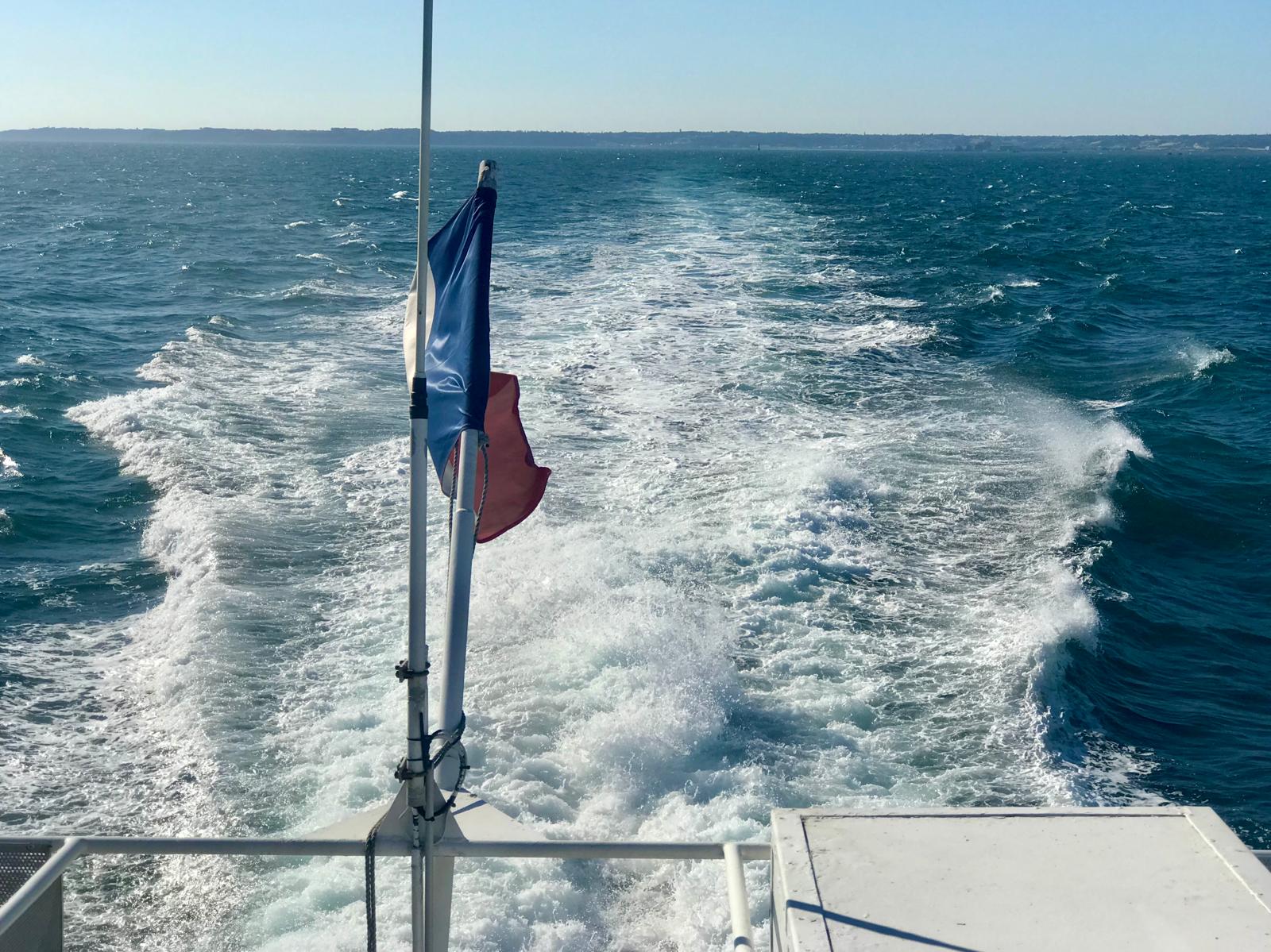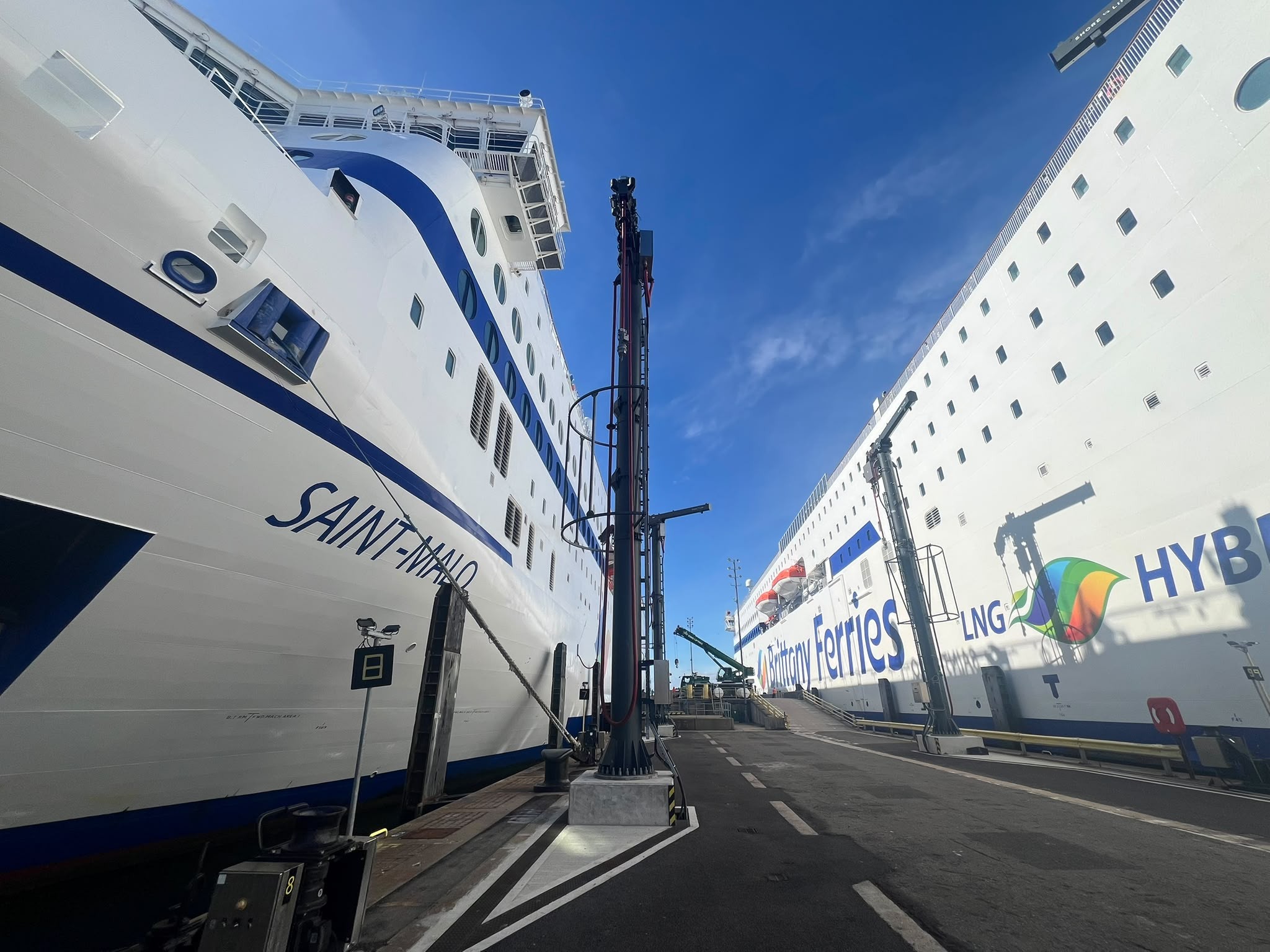
Good news for cross-Channel travellers from Portsmouth International Port this summer. Its new shore power system went live in July, and Brittany Ferries' two LNG-electric hybrids, Saint-Malo and Guillaume de Normandie, were the first ships to plug in. Visiting cruise ships have since connected too.
Plugged in at the quayside, the ships can switch off their engines and recharge their batteries, then leave Portsmouth Harbour on electric power. The port says that means cleaner air and less noise for the city, and estimates that shore power will avoid around 20,000 tonnes of CO₂-equivalent emissions a year from 2027.
How the two ships rank
Guillaume de Normandie produces 81.8 kg of CO₂ per passenger on a Portsmouth–Caen crossing, and Saint-Malo 113.9 kg on the longer Portsmouth–St Malo route. When this article was published, Guillaume de Normandie and Saint Malo ranked 16th and 20th respectively among the 22 crossings then covered by Ferry Scores, where 1st was the lowest per passenger. The live league table has since expanded to include additional Channel Islands services.
Hybrids further east
Other hybrids produce less per journey. P&O's Liberté and Pioneer produce 5.2 kg and 7.0 kg of CO₂ per passenger on Dover–Calais, a crossing about a fifth the length of Portsmouth–Caen. Mile for mile, Liberté still produces less than a third as much CO₂ per passenger as Guillaume de Normandie.
Why Commodore Clipper was excluded at publication
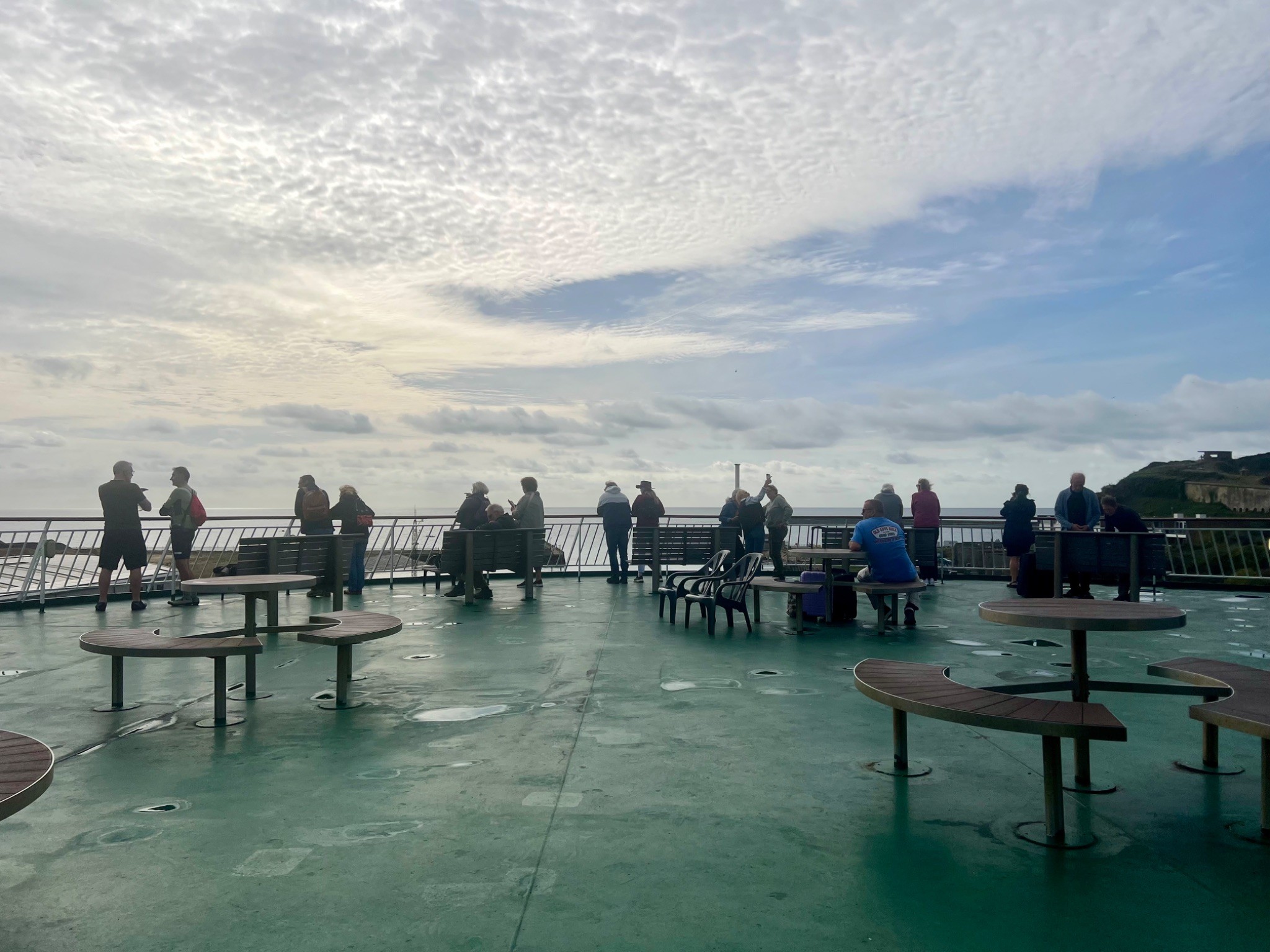
Brittany Ferries has closed its Portsmouth–Le Havre route. The last sailing was due on 28 September, but a technical problem with the Commodore Clipper, the ship on the route, ended sailings early.
When this article was published, Commodore Clipper was not included on Ferry Scores because its 2025 total included sailings outside the Channel, including to Ireland. We therefore left it out rather than infer a current assignment from the annual total alone, applying the same rule to Salamanca. Commodore Clipper has since returned to the current Ferry Scores table following a review of its current Portsmouth–Cherbourg service.
Shore power and hybrid ships are real progress. But no ferry company yet shows passengers the CO₂ for their crossing before they book. That's why we exist.
Sources
- Portsmouth International Port's shore power system goes live (Discover Ferries, July 2026).
- Guillaume de Normandie plugs into shore power at Portsmouth (Discover Ferries, August 2026).
- ABB brings UK's first high-voltage multi-berth shore power system into service in Portsmouth (ABB, September 2026): the port's CO₂-equivalent estimate.
- Brittany Ferries ends Portsmouth–Le Havre route early (BBC, September 2026).
- Brittany Ferries scraps England to France route earlier than planned (The Local, 23 September 2026).
- European Maritime Safety Agency, THETIS-MRV, 2025 reporting year.